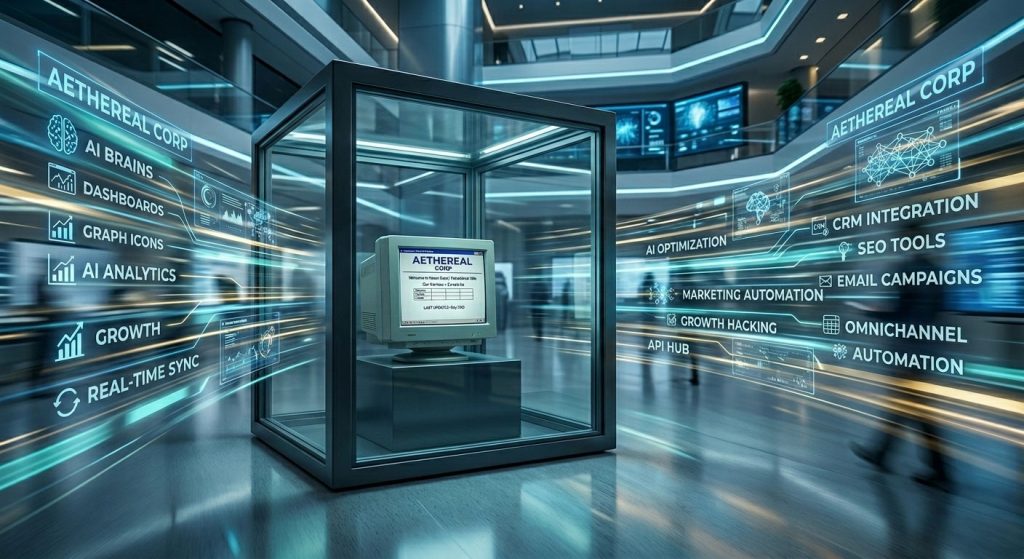
A website should be more than a digital brochure — it should be a dynamic business tool that supports growth, adapts to new technologies, and enables your marketing and operational strategies. But when a website is rigid and unscalable, it doesn’t just underperform — it becomes a serious bottleneck that slows your business down, limits opportunities, and increases long-term costs.
Whether it’s lack of integration, outdated architecture, or ineffective data structure, a site that can’t adapt will hold you back.
Why Website Flexibility Matters
Today’s digital landscape is moving fast. New tools, integrations, and strategies emerge constantly — from advanced analytics to automation workflows, customer portals, CRM syncs, and AI visibility requirements. A website that can’t integrate with these systems becomes an obstacle rather than an asset.
The real cost isn’t just technical limitations — it’s missed opportunities:
- Marketing campaigns that can’t be tracked or optimized
- Sales processes that can’t scale
- New tools that can’t be added
- AI systems that can’t interpret your content
A rigid website limits your ability to grow, adapt, and compete.
The Hidden Price of Technical Debt
A site that was never designed for scalability often incurs what developers call technical debt. Every time you need to change or extend functionality, you pay more — in time, in expense, and in lost momentum.
That means:
- Longer development timelines
- Higher costs for customization
- Greater dependency on developers
- Frustration when small updates become big projects
Technical debt isn’t visible on the surface, but its impact is felt every day. You end up paying limitations instead of investing in value.
When Growth Meets Limitations
As your business grows, your digital ecosystem needs to grow with it. Consider some common scenarios that expose inflexible sites:
- New integrations fail: Marketing automation, customer tools, and payment systems can’t plug in.
- Campaigns don’t track: Analytics and tracking tools break or can’t be implemented.
- AI search visibility suffers: Without structured data and scalable architecture, AI systems can’t read or recommend your content.
- Content becomes unmanageable: Updates, additions, and reorganizations become laborious and slow.
Each of these limitations causes friction — slowing your team and damaging your customer experience.
Designing for Evolution
A modern website isn’t built just on visual appeal — it’s built on structure, scalability, and flexibility. That means:
- Clear, logical content architecture
- Proper metadata and schema for AI visibility
- Integrated systems that communicate seamlessly
- Tools that support performance and growth
When you design with evolution in mind, the site becomes a platform — not a limitation.
How We Can Help
At Responsive Technology Partners, we build websites that empower your business now and in the future. Our approach ensures that your digital presence:
- Supports your current business goals
- Integrates with tools you rely on
- Scales as your strategy evolves
- Optimizes for AI and modern discovery methods
- Reduces dependency on developers for basic updates
Instead of a one-time project, we deliver a long-term business asset.
Actionable Takeaways
- Assess growth needs: What tools and systems does your business plan to use in the next 1–3 years?
- Audit technical limitations: What changes are difficult or costly on your current site?
- Plan for integration: Ensure your website can connect with key platforms (CRM, automation, analytics).
- Prioritize scalability: Choose flexible, modern architecture over short-term fixes.
A website that can’t evolve doesn’t just cost money — it costs growth, agility, and opportunity. Make sure your digital presence propels you forward, not holding you back.
Ready to build a website that supports growth, integrations, and future innovations?
Learn more about our web design process that keeps you in control and ready for what’s next.
The Cost of a Website That Can’t Evolve
Your website should be built to grow with your business, not hold it back. When a site lacks flexibility, scalability, and integration capabilities, it quickly becomes a bottleneck that slows marketing, sales, and innovation. Learn more about how our website process makes a difference.